

angle: The space (usually measured in degrees) between two intersecting lines or surfaces at or close to the point where they meet.
biology: The study of living things. The scientists who study them are known as biologists.
genetic: Having to do with chromosomes, DNA and the genes contained within DNA. The field of science dealing with these biological instructions is known as genetics. People who work in this field are geneticists.
high school: A designation for grades nine through 12 in the U.S. system of compulsory public education. High-school graduates may apply to colleges for further, advanced education.
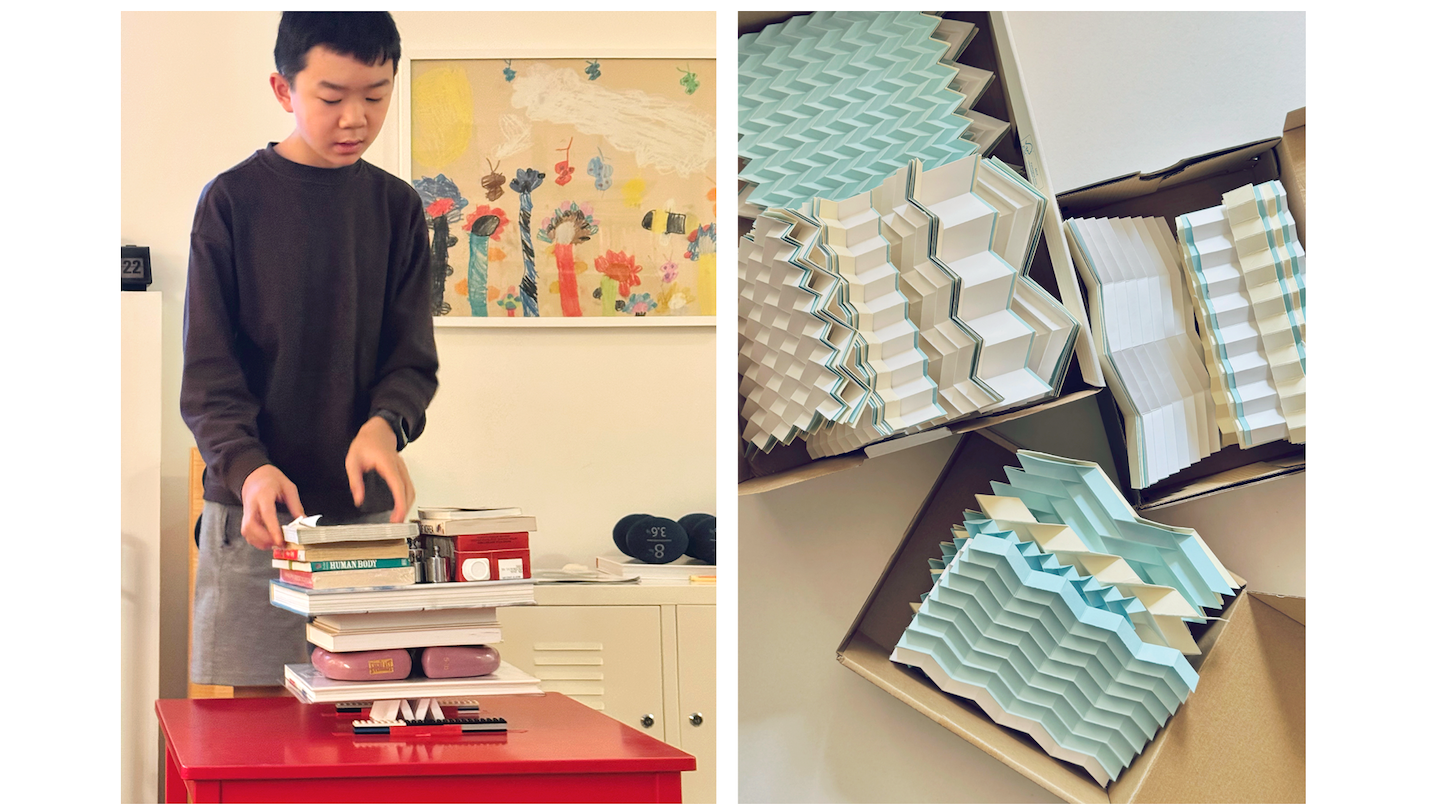
origami: The traditional Japanese art of paper folding. It starts with a flat sheet of paper. Through folding — and no cutting — the paper can be carefully folded into decorative 3-D structures, such as a bird in flight.
role model: Someone whose skill, behavior and/or personality makes them an inspirational ideal, the type who inspires others to model themselves after this person.
Society for Science: A nonprofit organization created in 1921 and based in Washington, D.C. Since its founding, the Society has been promoting not only public engagement in scientific research but also the public understanding of science. It created and continues to run three renowned science competitions: the Regeneron Science Talent Search (begun in 1942), the Regeneron International Science and Engineering Fair (initially launched in 1950) and the middle-school MASTERS competition (from 2010 to 2022) that morphed into the Thermo Fisher Scientific Junior Innovators Challenge (and launched in 2023). The Society also publishes award-winning journalism: in Science News (launched in 1922) and Science News Explores (created in 2003).
variant: A version of something that may come in different forms.