

acetic acid: A clear acid (also known as ethanoic acid). A dilute solution of it is known as vinegar. It’s used to make products such as rubber, plastics, paints and dyes. It has the chemical formula: CH3COOH.
acidic: An adjective for materials that contain acid. Acidic materials often are capable of dissolving away some minerals such as carbonate, or preventing their formation in the first place.
ancestor: A predecessor. It could be a family forebear, such as a parent, grandparent or great-great-great grandparent. Or it could be a species, genus, family or other order of organisms from which some later one evolved. For instance, ancient dinosaurs are the ancestors of today’s birds. (antonym: descendant)
anthropologist: A social scientist who studies humankind, often by focusing on its societies and cultures.
bacteria: (singular: bacterium) Single-celled organisms. These dwell nearly everywhere on Earth, from the bottom of the sea to inside other living organisms (such as plants and animals). Bacteria are one of the three domains of life on Earth.
bacterial: Having to do with bacteria, single-celled organisms. These dwell nearly everywhere on Earth, from the bottom of the sea to inside animals.
chemical: A substance formed from two or more atoms that unite (bond) in a fixed proportion and structure. For example, water is a chemical made when two hydrogen atoms bond to one oxygen atom. Its chemical formula is H2O. Chemical also can be an adjective to describe properties of materials that are the result of various reactions between different compounds.
digest: (noun: digestion) To break down food into simple compounds that the body can absorb and use for growth. Some sewage-treatment plants harness microbes to digest — or degrade — wastes so that the breakdown products can be recycled for use elsewhere in the environment.
ecologist: A scientist who works in a branch of biology that deals with the relations of organisms to one another and to their physical surroundings.
dehydrate: To lose a large amount of water.
enzymes: Molecules made by living things to speed up chemical reactions.
Eurasia: That part of the globe covered by Europe and Asia.
fermentation: (v. ferment) The metabolic process of converting carbohydrates (sugars and starches) into short-chain fatty acids, gases or alcohol. Yeast and bacteria are central to the process of fermentation. Fermentation is a process used to liberate nutrients from food in the human gut. It also is an underlying process used to make alcoholic beverages, from wine and beer to stronger spirits.
flavor: The particular mix of sensations that help people recognize something that has passed through the mouth. This is based largely on how a food or drink is sensed by cells in the mouth. It also can be influenced, to some extent, by its smell, look or texture.
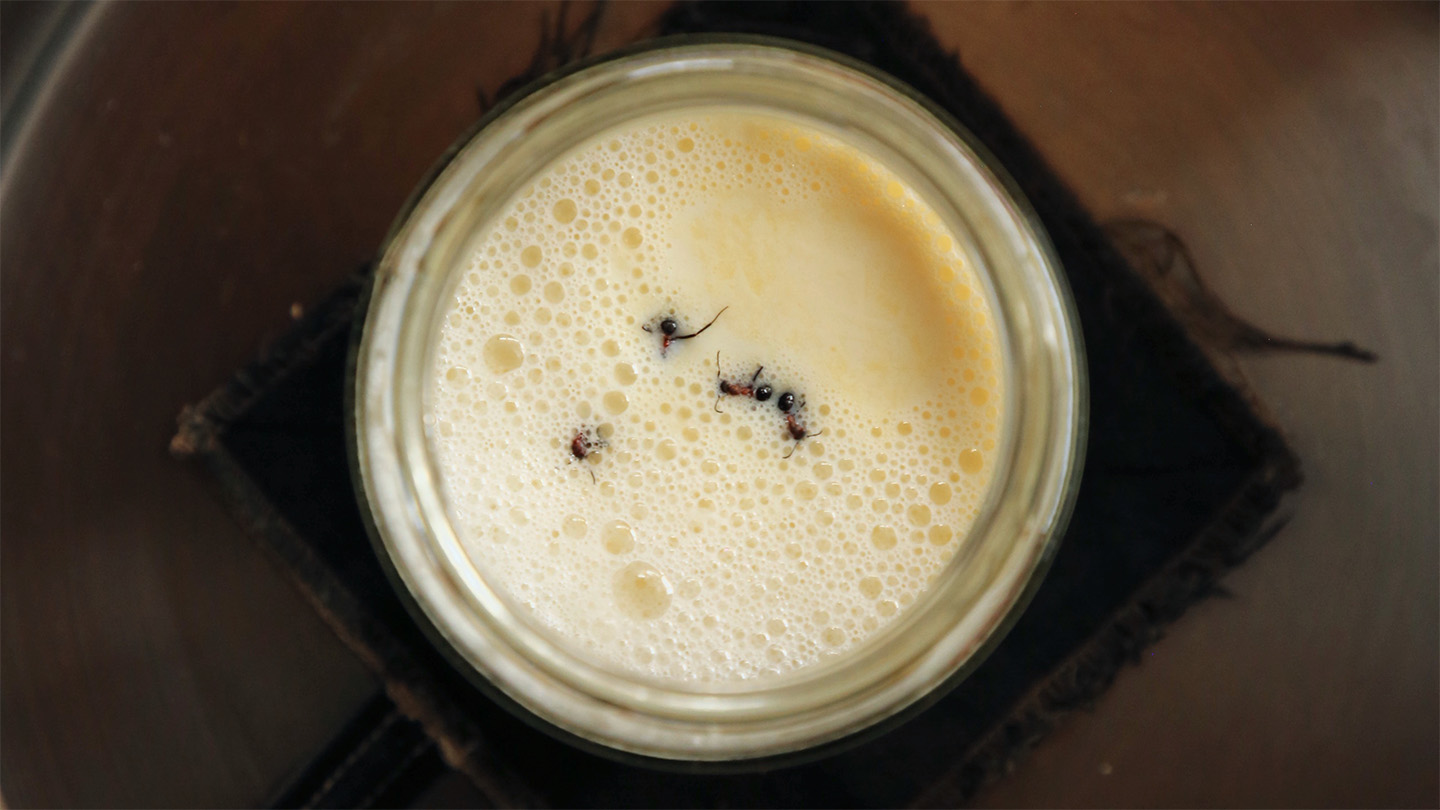
formic acid: A strong-smelling, colorless irritant that occurs naturally in the venom of some ants. The venom can kill many types of insects.
gastrointestinal tract: The organs — basically the stomach and intestines — that break down and absorb the nutrients needed by the body.
herb: A seed-making plant that does not produce long-lived woody stems or branches (as a shrub or tree does), but instead dies down to the ground at the end of the growing season. (in cooking and medicine) The plant or part of a plant valued for its scent, flavor or therapeutic properties.
insect: A type of arthropod that as an adult will have six segmented legs and three body parts: a head, thorax and abdomen. There are hundreds of thousands of insects, which include bees, beetles, flies and moths.
liquid: A material that flows freely but keeps a constant volume, like water or oil.
liver: An organ of the body of animals with backbones that performs a number of important functions. It can store fat and sugar as energy, break down harmful substances for excretion by the body, and secrete bile, a greenish fluid released into the gut, where it helps digest fats and neutralize acids.
parasite: An organism that gets benefits (such as food) from another species, called a host, while usually causing some degree of harm or discomfort to the host. Classic examples of parasites include ticks, fleas and tapeworms.
predator: (adjective: predatory) A creature that preys on other animals for most or all of its food.
species: A group of similar organisms capable of producing offspring that can survive and reproduce.
taste: One of the basic properties the body uses to sense its environment, especially foods, using receptors (taste buds) on the tongue (and some other organs).
technology: The application of scientific knowledge for practical purposes, or the devices, processes and systems that result from those efforts.
variety: (in agriculture) The term that plant scientists give to a distinct breed (subspecies) of plant with desirable traits. If the plants were bred intentionally, they are referred to as cultivated varieties, or cultivars.