

average: (in science) A term for the arithmetic mean, which is the sum of a group of numbers that is then divided by the size of the group.
behavior: The way something, often a person or other organism, acts towards others, or conducts itself.
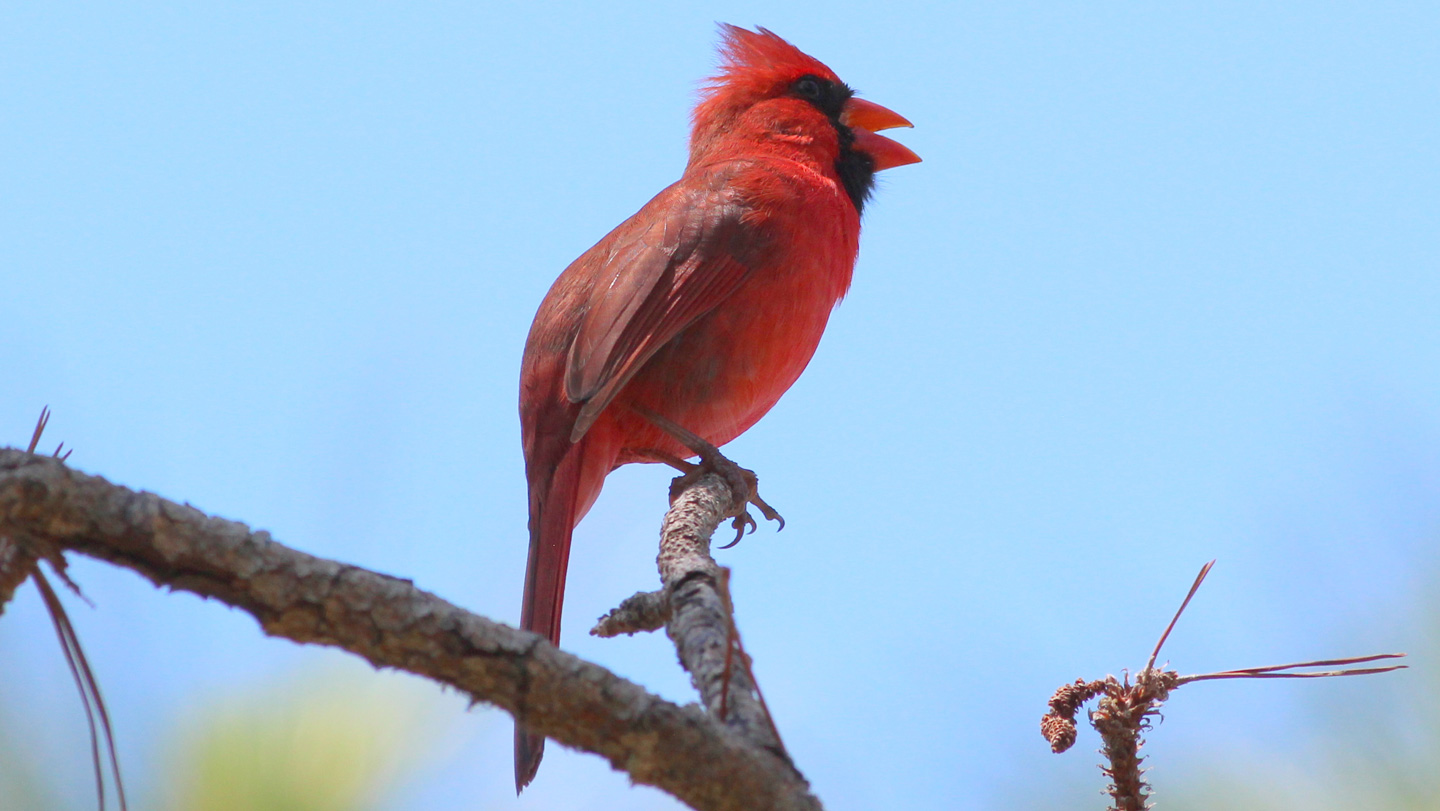
birds: Warm-blooded dinosaurs with wings that first showed up at least 150 million years ago. Birds are jacketed in feathers and produce young from the eggs they deposit in some sort of nest. Most birds fly, but throughout history there have been the occasional species that don’t.
citizen science: Scientific research in which the public — people of all ages and abilities — participate. The data that these citizen “scientists” collect helps to advance research. Letting the public participate means that scientists can get data from many more people and places than would be available if they were working alone.
colleague: Someone who works with another; a co-worker or team member.
context: The setting or circumstances that help explain an event, some statement or some conclusion.
data: Facts and/or statistics collected together for analysis but not necessarily organized in a way that gives them meaning. For digital information (the type stored by computers), those data typically are numbers stored in a binary code, portrayed as strings of zeros and ones.
ecologist: A scientist who works in a branch of biology that deals with the relations of organisms to one another and to their physical surroundings.
hormone: (in zoology and medicine) A chemical produced in a gland and then carried in the bloodstream to another part of the body. Hormones control many important body activities, such as growth. Hormones act by triggering or regulating chemical reactions in the body.
light pollution: The intrusion of unwanted light into areas that would naturally remain dark. Light pollution interferes with our ability to view the night sky. It also alters the circadian rhythms of plants, animals and people.
machine learning: A technique in computer science that allows computers to learn from examples or experience. Machine learning is the basis of some forms of artificial intelligence (AI). For instance, a machine-learning system might compare X-rays of lung tissue in people with cancer and then compare these to whether and how long a patient survived after being given a particular treatment. In the future, that AI system might be able to look at a new patient’s lung scans and predict how well they will respond to a treatment.
migrate: To move long distances (often across many countries) in search of a new home. (in biology) To travel from one place to another at regular times of the year to find food or more hospitable conditions (such as better weather). Species that migrate each year are referred to as being migratory.
species: A group of similar organisms capable of producing offspring that can survive and reproduce.
subtle: Adjective for something that may be important, but can be hard to see or describe. For instance, the first cellular changes that signal the start of a cancer may be only subtly different — as in small and hard to distinguish from nearby healthy tissues.